

About Course
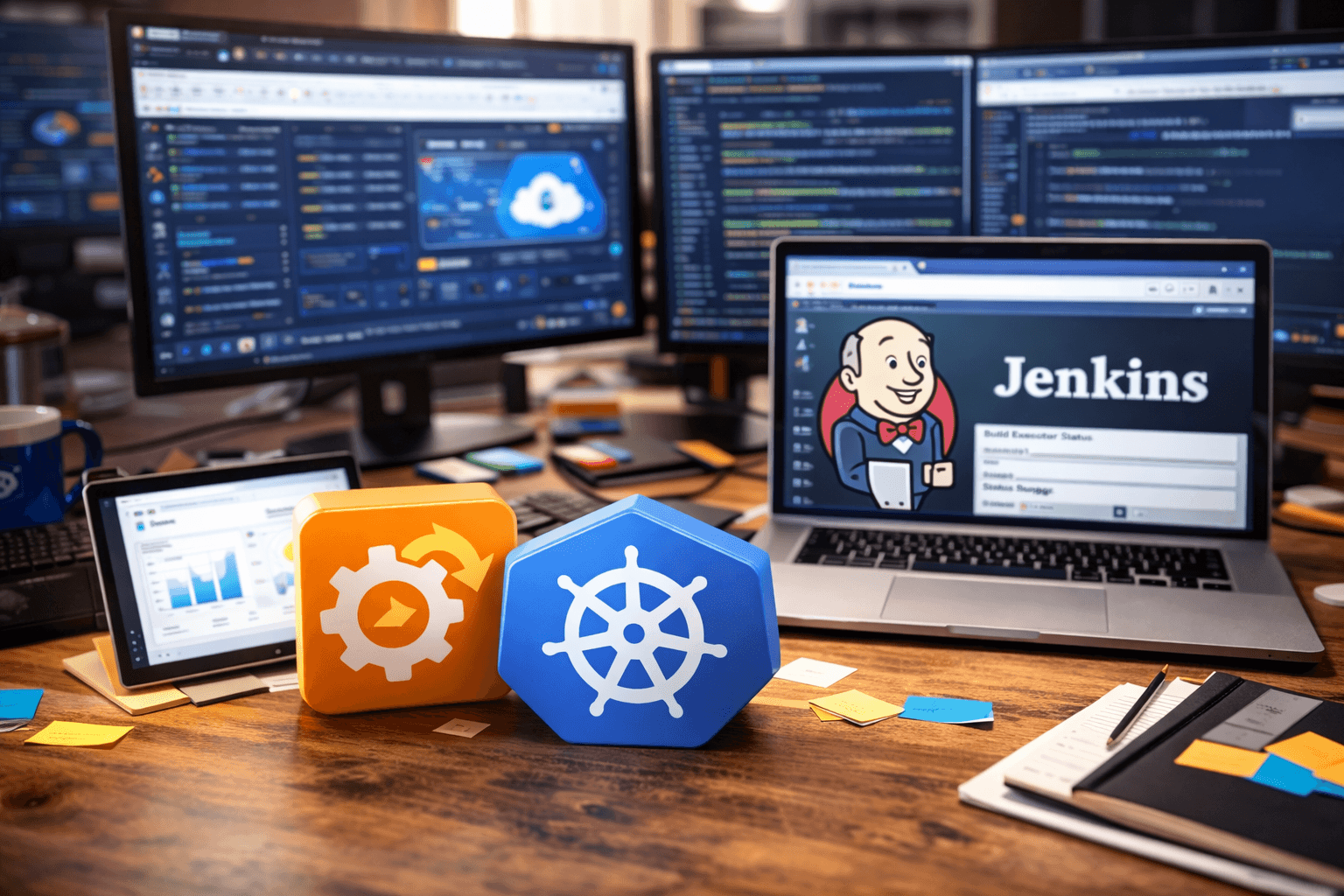
CareerCraft DevOps course is designed to provide a strong foundation and practical expertise in modern software delivery and infrastructure automation. The program focuses on bridging the gap between development and operations by adopting DevOps culture, practices, and industry‑standard tools to enable faster, reliable, and scalable application delivery.
Learners will gain hands-on experience across the complete DevOps lifecycle—from source code management and continuous integration to automated deployment, infrastructure as code, monitoring, and cloud-native operations. The course emphasizes real-world use cases, best practices, and toolchains commonly used in enterprise environments, preparing participants for real production scenarios.
By the end of the course, learners will be able to design, implement, and manage end‑to‑end CI/CD pipelines, automate infrastructure provisioning, deploy containerized applications, and ensure high availability and observability of systems.
What you'll learn
- Understand DevOps principles, culture, and best practices
- Learn how to collaborate effectively between development and operations teams
- Work with version control systems to manage and track source code
- Build and manage CI/CD pipelines for automated build, test, and deployment
- Automate application deployments across multiple environments
- Use Infrastructure as Code (IaC) to provision and manage systems reliably
- Containerize applications using Docker
- Deploy and manage containerized applications with Kubernetes
- Work with cloud platforms to build scalable and resilient systems
- Implement monitoring, logging, and observability for production environments
- Apply DevSecOps fundamentals to improve security and code quality
- Troubleshoot, optimize, and maintain high‑availability systems
Course Content
Introduction to DevOps
-
What is DevOps (Culture, Automation, Collaboration)
-
Why DevOps in Modern Software Delivery
-
DevOps Lifecycle and Core Principles
-
DevOps Toolchain Overview
-
Traditional SDLC vs Agile vs DevOps
-
Modern CI/CD Approach
-
Big Picture of CI/CD DevOps Delivery Pipeline
-
Interview Focus: DevOps concepts, real-world use cases
Operating System & Linux Basics
-
Introduction to Operating Systems
-
Virtual Machines vs Containers
-
Linux File System Architecture
-
Command Line Interface (CLI)
-
Essential Linux Commands
-
Package Management (yum, apt, dnf)
-
Vim Text Editor
-
Users, Groups and Permissions
-
Shell Scripting Fundamentals
-
Environment Variables
-
SSH – Secure Shell Access
-
Interview Focus: Linux troubleshooting and scripting
Version Control System – Git & GitHub
-
Introduction to Version Control Systems
-
Types of VCS (CVCS vs DVCS)
-
Git Architecture and Workflow
-
Installing Git on Windows and Linux
-
Core Git Commands
-
Creating and Cloning Repositories
-
Commit, Fetch, Pull and Push
-
Branching Strategies (GitFlow, Trunk-Based)
-
Branch Creation, Switching and Merging
-
Git Reset, Rebase and Stash
-
Working with GitHub Repositories
-
Interview Focus: Git workflows and conflict resolution
Build Automation Tool – Maven
-
Introduction to Build Automation
-
Maven Architecture and Lifecycle
-
Installing and Configuring Maven
-
Working with Maven Goals and Plugins
-
Dependency Management
-
Hands-on Maven Build for Java Applications
-
Interview Focus: Maven lifecycle and dependency handling
Continuous Integration – Jenkins
-
Introduction to Jenkins
-
Continuous Integration Concepts
-
Java Installation and Configuration
-
Jenkins Dashboard and Job Types
-
Creating and Running Jenkins Jobs
-
Global Environment Variables
-
Plugin Installation and Management
-
Job Enable, Disable and Deletion
-
Authorization Strategies and RBAC
-
Jenkins Best Practices
-
Email Notifications and Alerts
-
Job Scheduling and Webhooks
-
Build, Test and Deploy Pipelines
-
Jenkins Pipeline with Maven Project
-
Pipeline as Code using Jenkinsfile (Groovy)
-
Master-Agent Architecture
-
Credentials Management
-
Windows and Linux Agents on AWS EC2
-
Multibranch and Pipeline Jobs
-
Deploying Applications to AWS EC2 using Jenkins
-
Interview Focus: Jenkins pipelines and architecture
Containerization using Docker
-
Introduction to Docker and Containers
-
Containerization vs Virtualization
-
Docker Architecture and Components
-
Docker Installation on Linux
-
Working with Docker Images and Containers
-
Docker Networking
-
Writing Dockerfiles
-
Docker Volumes and Data Persistence
-
CI/CD Integration with Docker and Jenkins
-
Pushing Images to Docker Hub
-
Pushing Images to AWS ECR
-
Automating Docker Builds using Jenkinsfile
-
Docker Compose and Multi-Container Applications
-
Deploying Microservices using Docker Compose
-
Docker Swarm Architecture
-
High Availability, Scaling and Load Balancing
-
Interview Focus: Docker internals and CI/CD use cases
Container Orchestration – Kubernetes
-
Introduction to Kubernetes
-
Kubernetes Architecture
-
Cluster Setup and Exploration
-
YAML Configuration Files
-
Pods, Deployments and Services
-
Service Types (ClusterIP, NodePort, LoadBalancer)
-
Secrets and ConfigMaps
-
DaemonSets and StatefulSets
-
Persistent Volumes and PVCs
-
Rolling Updates and Rollbacks
-
Blue-Green and Canary Deployments
-
Helm Package Manager
-
Monitoring Kubernetes using Prometheus and Grafana
-
Interview Focus: Kubernetes architecture and deployments
Kubernetes on AWS – EKS
-
Introduction to Amazon EKS
-
Creating EKS Cluster on AWS
-
eksctl Command Line Tool
-
EKS Auto Scaling Configuration
-
Deploying Applications from Jenkins to EKS
-
CI/CD Pipelines using Docker Hub
-
CI/CD Pipelines using AWS ECR
-
Interview Focus: EKS architecture and CI/CD
Configuration Management – Ansible
-
Introduction to Configuration Management
-
Ansible Architecture
-
Ansible Installation
-
Ad-hoc Commands
-
Playbooks and Modules
-
Ansible Roles and Galaxy
-
Creating Custom Roles
-
Deploying Docker Containers with Ansible
-
Deploying Docker Compose with Ansible
-
CI/CD Integration with Jenkins
-
Interview Focus: Ansible playbooks and roles
Alerting, Monitoring & Observability
-
Introduction to Monitoring and Observability
-
Monitoring vs Alerting vs Observability
-
Why Monitoring is Critical in Production Systems
-
Observability Pillars : Metrics (CPU, Memory, Disk, Network)
-
Observability Pillars : Logs (Application & Infrastructure Logs)
-
Observability Pillars : Traces (Request Flow & Latency)
-
Application Monitoring : Application Health Checks
-
Application Monitoring : HTTP Response Codes (2xx, 4xx, 5xx)
-
Application Monitoring : Latency and Throughput Monitoring
-
Application Monitoring : Error Rate Monitoring
-
Infrastructure Monitoring : Server Metrics (CPU, Memory, Disk, Network)
-
Infrastructure Monitoring : Virtual Machines and Cloud Resource Monitoring
-
Infrastructure Monitoring : Auto Scaling and Resource Utilization
-
Container & Kubernetes Monitoring : Container Resource Metrics
-
Container & Kubernetes Monitoring : Kubernetes Cluster Health
-
Container & Kubernetes Monitoring : Node, Pod and Namespace Monitoring
-
Container & Kubernetes Monitoring : Liveness and Readiness Probes
-
Alerting Fundamentals : Alert Types (Threshold, Anomaly, Health-Based)
-
Alerting Fundamentals : Defining Alert Severity (Info, Warning, Critical)
-
Alerting Fundamentals : Reducing Alert Noise and False Positives
-
Alerting Fundamentals : Alert Fatigue and Best Practices
-
SLI, SLO and SLA Concepts : Service Level Indicators (SLI)
-
SLI, SLO and SLA Concepts : Service Level Objectives (SLO)
-
SLI, SLO and SLA Concepts : Service Level Agreements (SLA)
-
SLI, SLO and SLA Concepts : Error Budgets
-
Monitoring Tools Overview : Prometheus (Metrics Collection)
-
Monitoring Tools Overview : Grafana (Visualization & Dashboards)
-
Monitoring Tools Overview : Alertmanager (Alert Routing & Notifications)
-
Monitoring Tools Overview : Cloud Monitoring (AWS CloudWatch – Overview)
-
Logging & Log Aggregation : Centralized Logging Concepts
-
Logging & Log Aggregation : Application and Infrastructure Logs
-
Logging & Log Aggregation : Structured vs Unstructured Logs
-
Incident Management & On-Call : Incident Lifecycle
-
Incident Management & On-Call : On-Call and Escalation Policies
-
Incident Management & On-Call : Alert Routing (Email, Slack, Pager Tools)
-
Incident Management & On-Call : Post-Incident Review (PIR / RCA)
-
Dashboards & Visualization : Golden Signals (Latency, Traffic, Errors, Saturation)
-
Dashboards & Visualization : Service Health Dashboards
-
Dashboards & Visualization : Kubernetes Cluster Dashboards
-
Hands-On Monitoring Setup : Install Prometheus on Kubernetes
-
Hands-On Monitoring Setup : Install Grafana and Import Dashboards
-
Hands-On Monitoring Setup : Create Custom Alerts
-
Hands-On Monitoring Setup : Monitor a Microservice Application
-
Interview Focus: Monitoring strategies, alert design, SLI/SLO, production incident scenarios